Fresh-Milled Flour vs. Store-Bought Flour: What’s the Difference?
If you’ve ever baked with fresh-milled flour, you may have noticed that it behaves a little differently than the flour you find on the grocery-store shelf. The flavor, texture, aroma, and even the way the dough comes together can all be different.
So what exactly makes fresh-milled flour different from conventional store-bought flour?
Let’s break it down.
What Is Fresh-Milled Flour?
Fresh-milled flour is made by grinding whole wheat berries shortly before using them.
A wheat berry contains three main parts:
Bran – the outer layer of the wheat kernel
Germ – the nutrient-rich part of the kernel
Endosperm – the portion that contains most of the starch and protein
When whole wheat berries are freshly milled, all three parts are included in the flour unless the flour is sifted afterward.
Traditional white flour, on the other hand, is generally made primarily from the endosperm, with much of the bran and germ removed during processing.
Fresh-Milled Flour Has a Different Flavor
One of the first things people notice about freshly milled flour is the flavor.
Freshly milled wheat has a naturally nutty, slightly sweet, earthy flavor that can be difficult to get from older flour. The difference can be especially noticeable in simple breads where the flavor of the wheat really has a chance to shine.
Hard white wheat tends to have a mild, slightly sweet flavor, while soft white wheat produces a softer, more delicate flour that works beautifully in things like muffins, quick breads, cookies, and pastries.
Fresh-Milled Flour Contains the Whole Wheat Kernel
Because freshly milled whole wheat flour contains the bran, germ, and endosperm, it has a different nutritional profile from refined white flour.
The bran contributes fiber, while the germ contains naturally occurring nutrients and oils.
That doesn't automatically mean every recipe made with fresh-milled flour is "healthy"—a cookie is still a cookie! But using the whole wheat kernel allows you to retain components that are removed when wheat is heavily refined.
Why Does Fresh-Milled Flour Absorb So Much Water?
This is one of the biggest differences you'll notice when you start baking with fresh-milled flour.
Fresh-milled flour can absorb water differently than conventional flour, particularly when you're using whole wheat flour.
The bran and germ change the way the flour interacts with water, and freshly milled flour may need time to fully hydrate.
If your dough seems unusually stiff or dry, don't immediately assume you've done something wrong. You may simply need to adjust your hydration or give the flour more time to absorb the water. When I bake the sourdough that our customers love, I allow my flour to sit and soak up the water for 30-45 minutes before mixing any other ingredients.
Fresh-Milled Flour Can Make Beautiful Sourdough
Fresh-milled flour and sourdough are a fantastic combination.
The naturally complex flavor of freshly milled wheat pairs beautifully with the tang and fermentation of sourdough.
However, fresh-milled flour can make sourdough behave differently from a loaf made with commercial bread flour.
You may notice:
A dough that feels different during mixing
Faster or slower fermentation depending on the flour and temperature
A more substantial crumb
More pronounced wheat flavor
Different hydration requirements
The key is learning what your particular flour and dough look and feel like rather than relying only on a clock.
Hard White Wheat vs. Soft White Wheat
Not all white wheat is the same.
Hard white wheat has a higher protein content and is often a great choice for yeast breads and sourdough.
Soft white wheat has less protein and produces a tender, softer flour. It's especially useful for baked goods such as muffins, cakes, cookies, biscuits, and quick breads.
At Quadruple J Ranch, we love having both options because they each have their own place in the kitchen.
Does Fresh-Milled Flour Have to Be Used Immediately?
No!
Freshly milled flour can be used right away, but you don't necessarily have to bake with it immediately.
Fresh-milled whole grain flour contains natural oils from the wheat germ, so it doesn't have the same shelf life as highly refined flour.
For longer storage, keeping freshly milled flour in an airtight container in the refrigerator or freezer can help preserve its freshness.
If you mill more flour than you need for one recipe, proper storage is important.
Can You Substitute Fresh-Milled Flour for Store-Bought Flour?
Yes, but don't expect every recipe to behave exactly the same.
A straight one-to-one substitution by weight is a good starting point, but you may need to adjust the amount of liquid depending on the recipe and the type of wheat you're using.
Fresh-milled flour also benefits from a little patience. Give the flour time to hydrate, pay attention to the dough's texture, and make adjustments as you learn how it behaves.
Why We Love Fresh-Milled Flour
For us, fresh-milling isn't just about making flour.
It's about starting with the whole wheat berry and knowing exactly where the flour in our kitchen begins.
There's something special about milling wheat right before baking and filling the kitchen with that fresh, nutty aroma.
Whether you're making sourdough bread, cinnamon rolls, muffins, pancakes, or something completely new, fresh-milled flour brings something different to the table.
And once you've baked with it, you may never look at a bag of flour quite the same way.
Welcome to Quadruple J Ranch
We're a small family ranch working to bring more homemade, fresh-milled, and thoughtfully made foods to our community.
From freshly milled wheat flour to sourdough and other homemade goods, we're excited to share what we're learning along the way.
Thanks for following along with us!
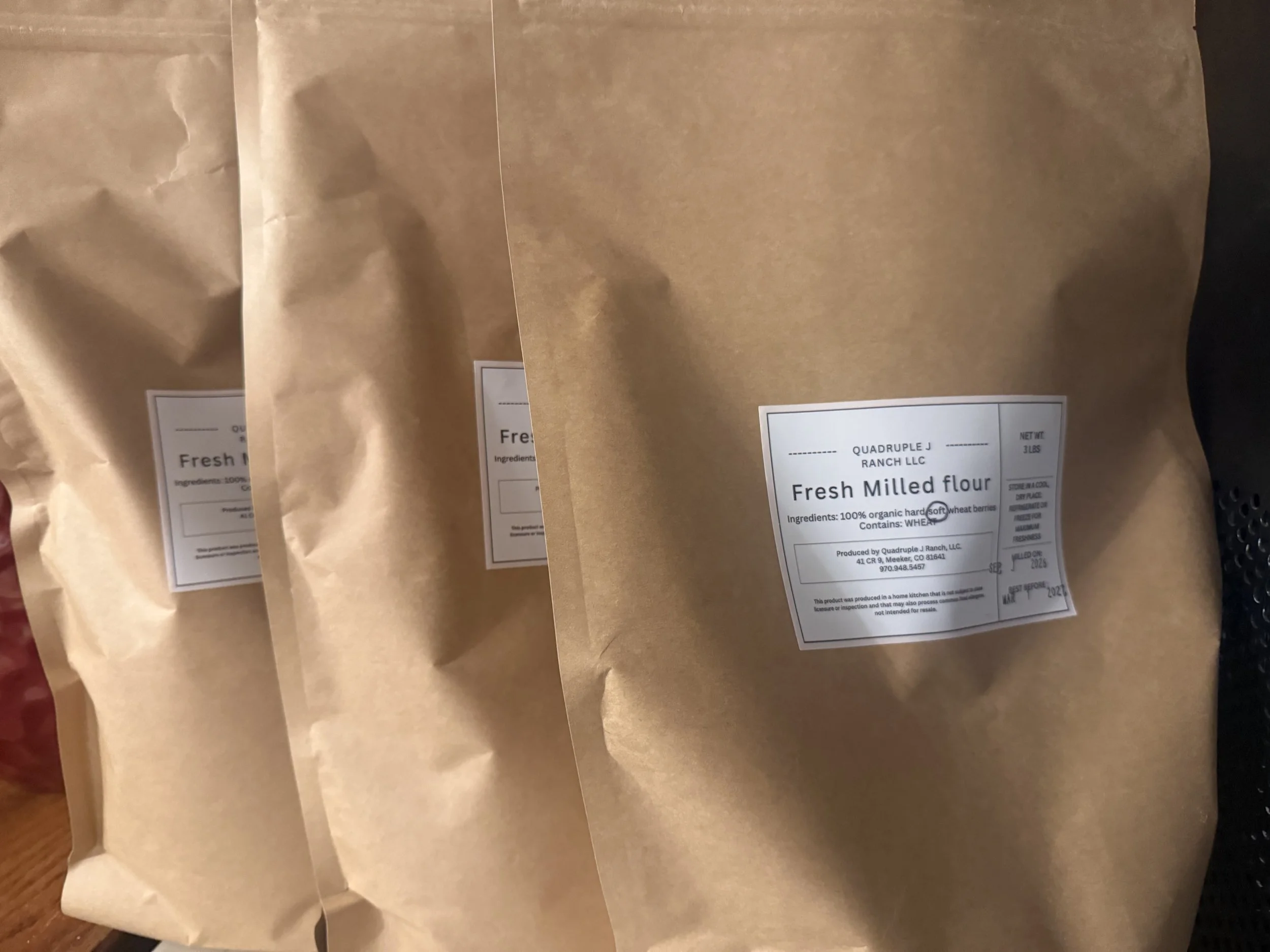
Our flour is made from certified organic and glyphosate residue free wheat berries, stone milled to order.
