How to Store Fresh-Milled Flour: Keeping Your Flour Fresh
There is something special about opening a container of flour that was milled just days—or even hours—before you bake with it.
Fresh-milled flour has a wonderful aroma and flavor because it contains the natural components of the whole wheat berry. But those same natural oils mean fresh-milled flour needs a little more care than the highly refined flour you may be used to buying at the grocery store.
So how should you store it?
Let's talk about it.
Why Does Fresh-Milled Flour Need Special Storage?
A whole wheat berry contains the bran, germ, and endosperm.
The germ naturally contains oils. Once the wheat berry is milled, those oils are exposed to air.
Over time, exposure to oxygen, heat, moisture, and light can cause the flour to lose some of its freshness.
That doesn't mean freshly milled flour is difficult to store. It simply means that proper storage matters.
Keep It Airtight
The first rule of storing fresh-milled flour is simple:
Keep it in an airtight container.
An airtight container helps protect your flour from moisture, odors, and unnecessary exposure to oxygen.
If you're keeping flour in its original bag for a short period, make sure the bag is securely closed. For longer storage, transferring it to an airtight container can provide additional protection.
Keep It Cool
Heat can shorten the shelf life of whole-grain flour.
If you're planning to use your fresh-milled flour fairly quickly, a cool, dry pantry can work well.
If you've milled more flour than you plan to use soon, refrigeration or freezing can help preserve its freshness for longer.
Can You Refrigerate Fresh-Milled Flour?
Yes!
Refrigerating fresh-milled flour is a great option if you aren't going to use it right away.
Place the flour in a well-sealed, airtight container before putting it in the refrigerator. This helps prevent the flour from absorbing moisture or picking up odors from other foods.
When you're ready to bake, allow the flour to come back toward room temperature before using it if your recipe calls for ingredients at room temperature.
Can You Freeze Fresh-Milled Flour?
Absolutely.
Freezing is one of our favorite options for storing flour that won't be used quickly.
Place the flour in a freezer-safe, airtight container or bag and remove as much excess air as practical.
When you need it, take out what you'll use and allow it to come back toward room temperature before baking.
Freezing can be especially useful if you like to mill flour in larger batches.
How Long Does Fresh-Milled Flour Last?
There isn't one exact expiration date that applies to every batch of fresh-milled flour.
Storage conditions make a big difference.
Flour stored at room temperature will generally have a shorter storage life than flour kept refrigerated or frozen.
When in doubt, use your senses.
Fresh flour should have a pleasant, clean, wheaty aroma.
If it develops an unusual, stale, or rancid smell, that's a sign that it may no longer be at its best.
What About the Flour We Sell at Quadruple J Ranch?
When you purchase fresh-milled flour from Quadruple J Ranch, we recommend storing it properly as soon as you get it home.
If you're planning to use it soon, keep it sealed in a cool, dry place.
If you want to keep it longer, refrigeration or freezing is a great option.
And remember: you don't have to be afraid of your flour!
Fresh-milled flour is meant to be used and enjoyed. Bake a loaf of sourdough, make a batch of cinnamon rolls, whip up some pancakes, or try something completely new.
A Few Simple Storage Tips
Here are our biggest tips to remember:
1. Keep your flour airtight.
Limit exposure to air and moisture.
2. Keep it cool.
Avoid storing fresh-milled flour next to a hot oven or other heat source.
3. Refrigerate or freeze for longer storage.
This can help preserve freshness.
4. Label your flour.
If you're storing multiple types of wheat, write the variety and milling date on the container.
5. Trust your senses.
Fresh flour should smell fresh and pleasantly wheaty.
Why Fresh Milling Is Worth It
Fresh-milled flour does require a little more attention than a typical bag of refined flour, but that's part of what makes it special.
You're working with the whole wheat berry, freshly transformed into flour and ready for your kitchen.
At Quadruple J Ranch, we love knowing exactly where our flour starts—and we love seeing what our customers create with it.
From our ranch to your kitchen, we're excited to share the goodness of freshly milled wheat with you.
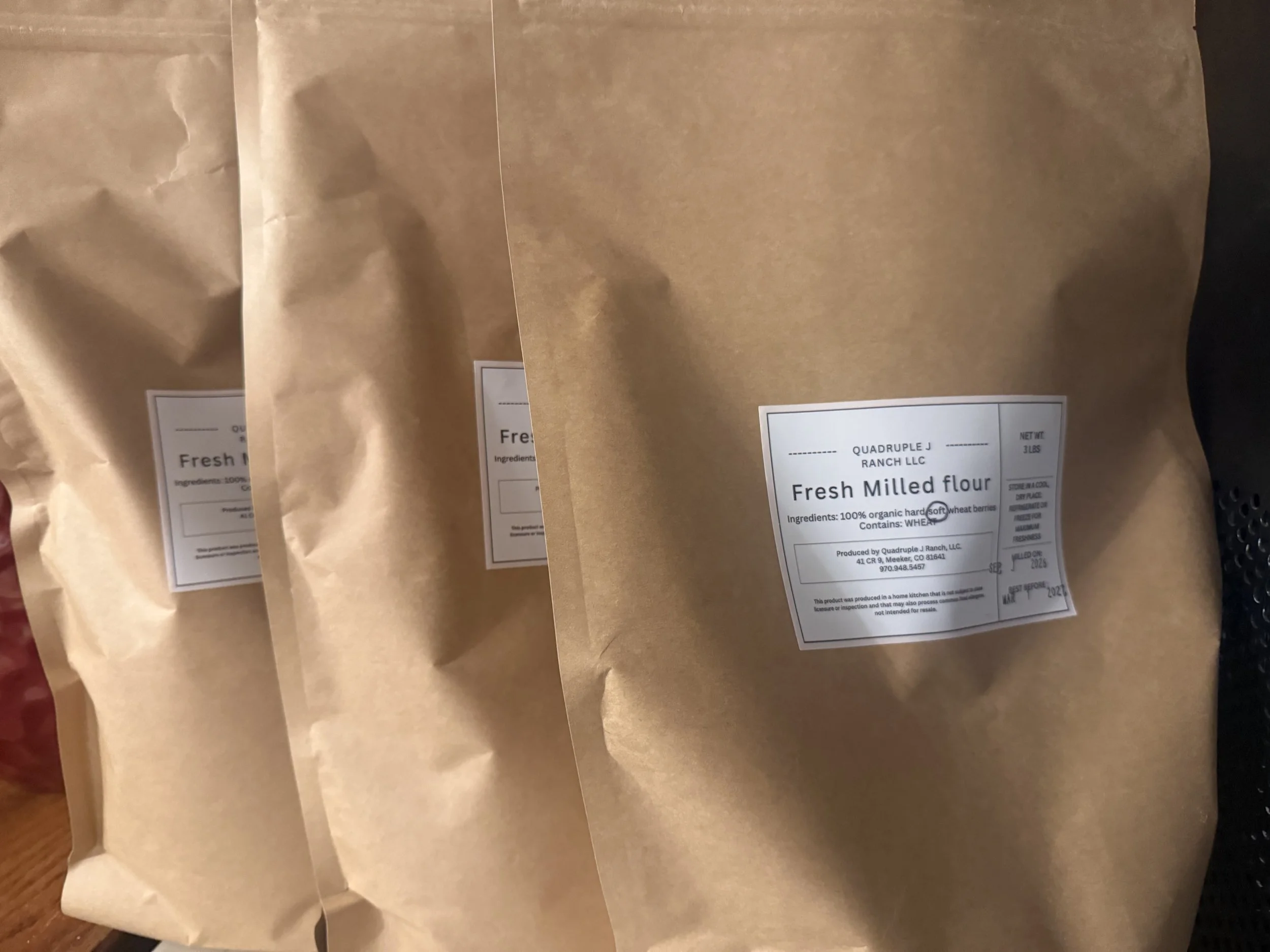
Our flour is made from certified organic and glyphosate residue free wheat berries, stone milled to order.
